
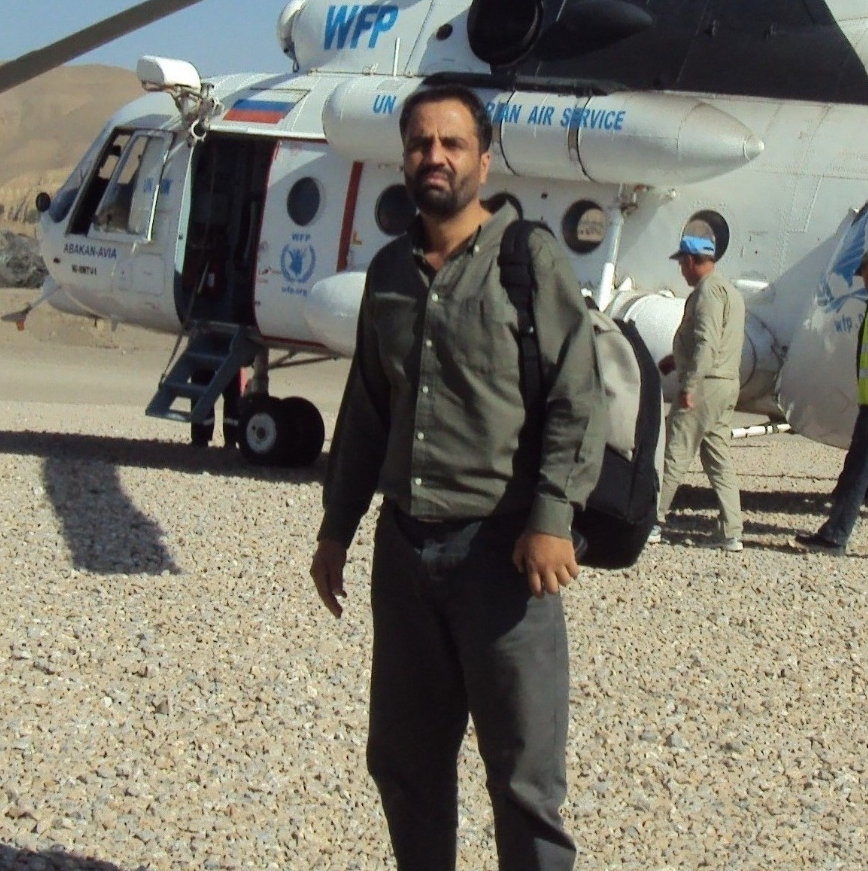
I am Zakir, born and raised in Afghanistan. I was 16 years old when we were trapped in the middle of a devastating conflict during the Afghan Civil War in 1992. Every day felt like a fight for survival. The sound of violence surrounded us, and fear became a constant part of our lives. There were many nights when I lay awake, wondering if I would live to see the next morning. In those dark moments, I kept asking myself: If I survive this, what will my future look like? Will I ever have the chance to dream again?
The uncertainty was overwhelming. It is difficult to describe what it feels like to not know whether you will have a tomorrow. I became stressed and traumatised at young age. My hopes and plans seemed so fragile, as if they could disappear at any moment. Yet, even in the middle of despair, I tried to hold onto a small piece of hope. When we received humanitarian aid, it felt like a lifeline. It was more than just food or supplies; it was a reminder that we were not alone and not forgotten. The help came at a time when we needed it the most. I learned how powerful timely support can be. It does not only save lives; it restores dignity and hope. That assistance gave us strength to continue, even when everything felt impossible. Experiencing internal displacement at around the age of 19 inspired my lifelong dedication to helping and supporting others.
Despite the destruction and the lack of resources, I was given a chance to continue my education. The conditions were far from ideal. We had limited materials, limited space, and constant uncertainty. Sometimes it was hard to focus because fear and stress followed us everywhere. But I refused to give up, and education became my light in the darkness. It was my way of believing that my life could be more than the conflict surrounding me.
Studying under such circumstances was not easy, but it taught me resilience and determination. Every page I read, every lesson I learned, felt like a step away from fear and a step closer to hope. I have realised that even in the hardest times, the human spirit can endure. As the famous Afghan proverb goes: Humans can be harder than stone while also being softer than a flower.
Living through conflict changed me forever. It made me stronger, more grateful, and more aware of the value of peace and opportunity. Today, I carry both the pain and the strength that came from those experiences. They continue to inspire me to build a future filled with purpose, stability, and hope, not only for myself, but for others who are still living in the shadow of conflict.
I did not plan to become an aid worker. My first ambition was quieter and more personal. I wanted to be a veterinary doctor, working for animals and with farmers, helping life grow where it struggled. I was not drawn to power or politics, but to something practical and human, to be the voice of those who do not have a voice. Life, however, does not always follow our plans. Conflict, displacement, and limited opportunities closed that path before I could begin. When one door remained shut, I stepped through another without knowing it would define the next twenty years of my life.
My humanitarian journey began in Afghanistan where I grew up with no clear career direction. I started working directly with the communities, learning by listening, observing, and walking alongside people rather than leading from above. Growth came slowly and unevenly, shaped by insecurity, risk, and loss. I travelled through isolated areas, crossed checkpoints, and worked amid shifting remote areas. Over time, responsibilities expanded from supporting small community initiatives to coordinating projects, managing teams, and eventually leading organisations in some of the most complex environments in the world, like Afghanistan and Yemen. Each step forward was earned not through ambition alone, but through hard work, patience, trust and adaptability.
Aid work taught me lessons that no classroom could provide. I learned that kindness often matters more than technical expertise, and that communities are not passive recipients of aid but active leaders in shaping their own survival and resilience. I learned that poor notions of aid could reinforce dependency, while good aid models strengthen dignity and local capacity so that people can stand on their own. Some of the hardest lessons came through loss when colleagues and friends were taken by conflict, leaving behind not only grief, but an enduring reminder of the human cost of the work we do. These moments revealed how deeply personal humanitarian work is, and how it is carried by names, faces, and shared sacrifices.
I have also learned that in conflict-affected countries, humanitarian aid and philanthropy is not only about delivering services. It also helps preserve dignity, maintain social cohesion, and prevent fragile systems from collapsing entirely. When done well, humanitarian assistance allows people to survive crises while holding on to agency and hope. It creates space for resilience in places where everything else is being stripped away.
I did not become a veterinary doctor, but I am happy and proud that I still work for people, communities, and the resilient systems that allow dignity to survive even in the darkest moments.
After more than twenty years, I do not see a straight path, but a series of lessons, losses, and quiet commitments renewed again and again. I am still learning and trying to remain relevant, strategic, and employable in a rapidly transforming sector. I am a professional who has fled war. Behind every refugee’s journey are countless difficult decisions, painful challenges, and the courage to begin again from nothing. Starting over in a new country is never easy. It means rebuilding life step by step, learning new systems, adapting to a new culture, and holding on to hope even when the path feels uncertain. But resilience grows in these moments. Every small step forward becomes a victory, and every challenge becomes a lesson in strength. I am deeply grateful that compassion is still alive in this world. There are people who open their hearts, offer support, and remind us that being human has no borders. I remain hopeful, motivated, and optimistic about the future. Life may force us to start over, but it also gives us the opportunity to rebuild stronger, wiser, and more determined than before.
In the end, perhaps the most enduring lesson from my experiences is never to lose hope, even in the darkest moments, because hope can carry you much further than you imagine.
*
Related:
Trauma and Recovery: The Aftermath of Violence—From Domestic Abuse to Political Terror, Judith Herman, M.D.
When Trauma and Recovery was first published in 1992, it was hailed as a groundbreaking work. In the intervening years, it has become the basic text for understanding trauma survivors. By placing individual experience in a broader political frame, Judith Herman argues that psychological trauma can be understood only in a social context. Drawing on her own research on incest, as well as a vast literature on combat veterans and victims of political terror, she shows surprising parallels between private horrors like child abuse and public horrors like war. A new epilogue reviews what has changed—what has not changed—over two decades. Trauma and Recovery is essential reading for anyone who seeks to understand how we heal and are healed.
PDF│Trauma and Recovery: The Aftermath of Violence—From Domestic Abuse to Political Terror, Judith Herman, M.D.

 Unwritten Lives uses only essential cookies required for basic functionality.
We do not use analytics, tracking, or advertising cookies.
Unwritten Lives uses only essential cookies required for basic functionality.
We do not use analytics, tracking, or advertising cookies.