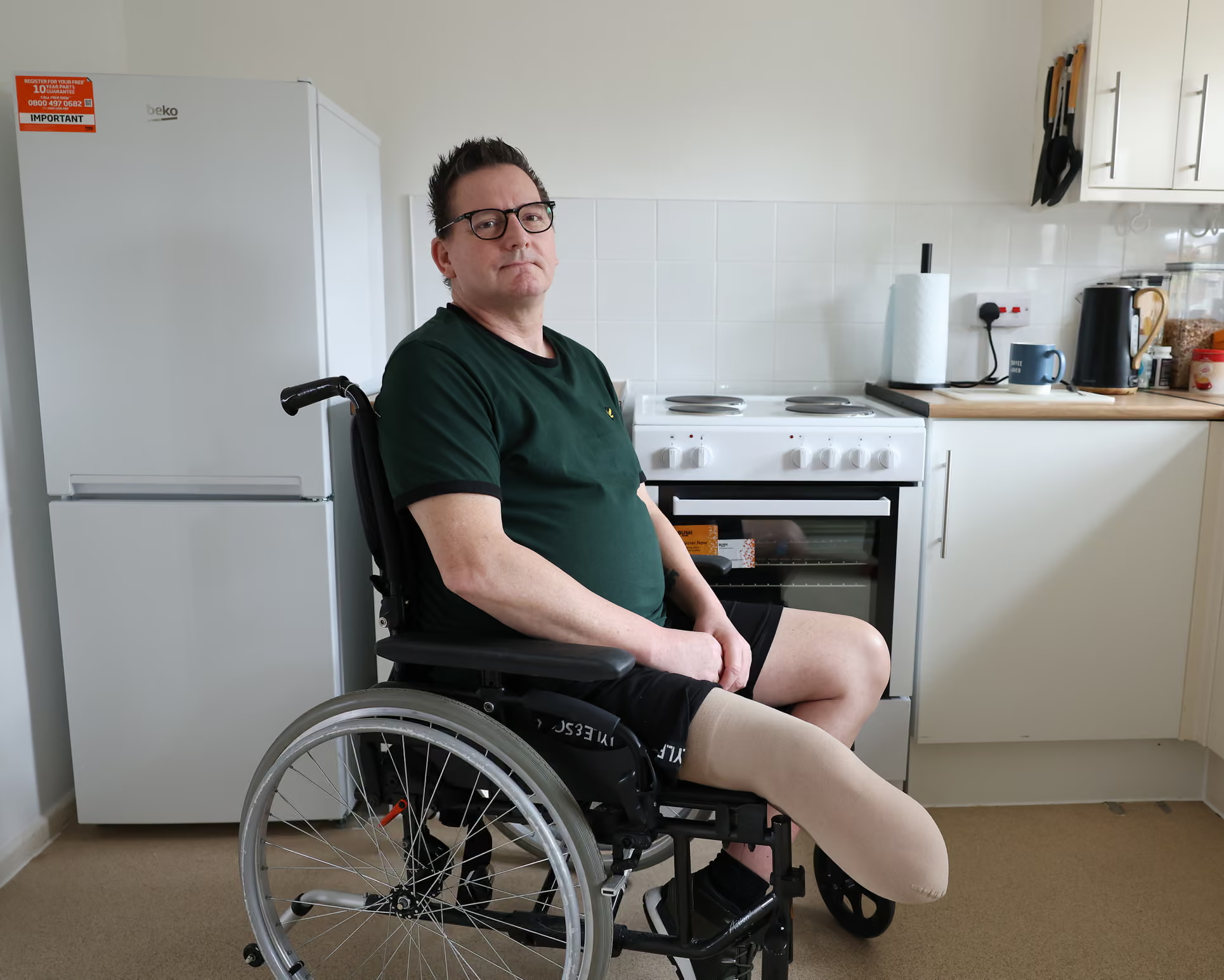
When Richard Hewett’s relationship ended, he had to leave his partner’s house – but his disability benefits weren’t enough to get him his own flat. He resorted to sleeping in his car.
It wasn’t what he had expected, aged 59. At 6ft 2in, he squeezed into a Ford Focus. When he broke his ankle, he couldn’t look after it properly, contracted sepsis and had his leg amputated.
But what stings the most is the feeling of shame. He was no longer able to take care of his appearance, which he had always taken pride in. He went to the toilet in a park daily, where passersby would ask: “Can’t you go somewhere else?”
“It was horrendous,” he said. “People are so terribly judgmental … It really had quite an effect on my mental health.”
Hewett is one of a rapidly rising number of older people facing homelessness as housing benefit levels fall behind rents. Recent figures from the Office for National Statistics show that 15,690 households headed by over-65s are at risk of homelessness, a rise of 79% in the last five years.
Several homelessness charities report rising numbers of people over 55 seeking help. Chain (Combined Homelessness and Information Network) reported an increase in older people sleeping rough in London from 450 at the beginning of 2024 to 713 at the end of 2025.
Alexander Brown of Soup Kitchen London has seen “a clear increase” in the number of over-65s over the last two years. They form 20% of the 200 people the charity helps each morning. They cite the rising cost of food and utilities, along with poor physical health and isolation, as factors.
The Greater Change charity, which has supported Hewett with a grant, said that over the last four years the median age among the people it supports had increased by more than eight years.
Chief executive, Jonathan Tan, said older clients were rarely pushed into homelessness by a single event. Instead, “loss, ill health, financial pressure and systemic gaps” pushed people into crisis, compounded by rising living costs, the loss of employment later in life and limited opportunities to re-enter the workforce.
Jess Harris of King’s College London said there were two main cohorts of older homeless people: those who have experienced multiple adverse events – addiction, mental illness and childhood trauma – who have lived on and off the streets for decades, and those more recently pushed into temporary homelessness.
Although average UK rent has risen by 10.5% since April 2024, housing benefit has been frozen since 2024, which she urged the government to address.
This was the experience for Sarah (not her real name). In her mid-60s, she ended up sofa surfing after a relationship breakdown. Her benefits would not cover rent or a deposit. Then her benefits were stopped due to the lack of a fixed address.
“I wouldn’t recommend it to anybody, because you’d be sleeping on sofas and things like that. You’ve got to keep on moving around every three nights,” she said.
*

 Unwritten Lives uses only essential cookies required for basic functionality.
We do not use analytics, tracking, or advertising cookies.
Unwritten Lives uses only essential cookies required for basic functionality.
We do not use analytics, tracking, or advertising cookies.