It should not be normal, after decades of recurring epidemics and repeated global warnings, that communities facing deadly outbreaks still depend primarily on improvisation, emergency goodwill, and delayed international attention. Neglected diseases is a euphemism for neglected populations.
The latest outbreak of Ebobla is unacceptable—and it should make us deeply uncomfortable. Not because frontline teams lack commitment or expertise, but because once again an Ebola outbreak is unfolding without the appropriate tools. Proven species-specific vaccines or therapeutics are still not readily available despite years of scientific progress, and the most promising candidates remain inaccessible, underfunded, or politically deprioritised.
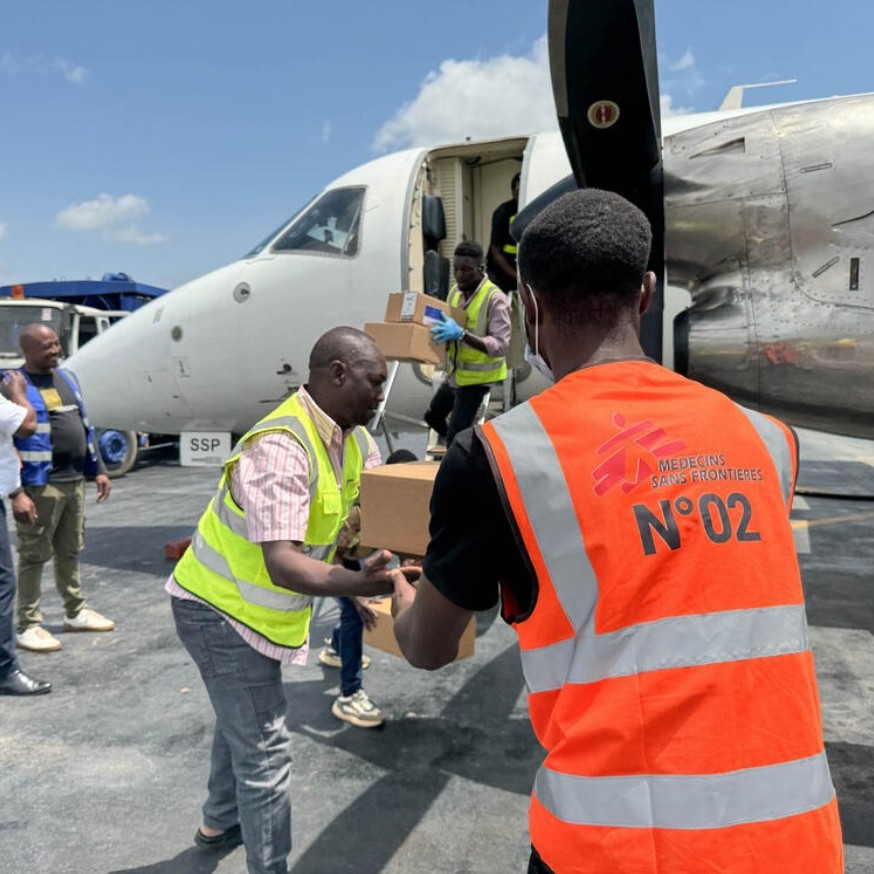
My first thoughts are with the patients, communities, and health workers operating in the particularly difficult and insecure context of eastern Democratic Republic of Congo (DRC), with the outbreak now also extending into Uganda. I obviously think of the MSF team present already and who are so dedicated. Across the region, local responders, ministries of health, humanitarian organisations, and frontline staff continue to work under conditions that many wealthier countries would simply never tolerate for their own populations.
On the ground, responders are doing what they have always done: supportive clinical care, infection prevention and control, community engagement, surveillance, contact tracing, flexible logistics, and adaptation to highly constrained environments. These interventions save lives. Putting their lives at risk to save lives. But it remains deeply troubling that, less than a decade after a major Ebola crisis, in the age of mRNA technologies, AI, and globalised goods moving around the planet, the world is still largely merely relying on supportive treatment and case management for these outbreaks.
This outbreak involves the Bundibugyo species of the Ebola virus, for which no specific vaccine or therapeutic currently exists. Given the rarity of this species, the situation once again highlights the urgent need for pan-Ebola approaches capable of protecting against all known Ebola species. Yet here we are again: responding with limited tools, improvisation, and emergency measures, while potentially life-saving innovations remain trapped behind fragmented funding systems, weak commercial incentives, regulatory barriers, limited manufacturing capacity, and geopolitical priorities.
It is difficult to imagine that this level of global unpreparedness would be politically acceptable if similar epidemic risks threatened populations in Europe or North America. We have seen and denounced these dynamics with the COVID pandemic. When entire regions repeatedly face preventable deaths because investment does not align with market profitability, we should stop calling this a “gap” or a “market failure”. It reflects a hierarchy of whose lives are protected, whose diseases matter, and which crises are considered economically worth solving.
And beyond Ebola, the pattern is painfully familiar for so many other neglected diseases. Neglected diseases is a euphemism for neglected populations. From West African Ebola outbreaks to COVID-19, the international community repeatedly promises that lessons will be learned, preparedness strengthened, and inequities addressed. Yet, each crisis exposes the same reality: collective memory is short, solidarity remains conditional, and public health priorities continue to be subordinated to economic rationales, political cycles, intellectual property regimes, and market interests.
Even diagnostics reflect these inequalities. Existing platforms such as GeneXpert do not adequately detect all Ebola species, complicating early identification and delaying response efforts.
Once again, populations already living in fragile health systems bear the consequences of scientific and industrial choices made far away from the outbreak itself.
To the classical liberal economists who founded economic thought, I would say: There is no “invisible hand” of the market correcting this imbalance of supply and demand. What remains invisible instead are the victims—those living in regions where disease is recurrent, yet market incentives are too weak to generate sufficient supply, investment, or innovation.
It is time to rethink our economic model in terms of other values: the common good, open science, and collective responsibility, with health understood and protected as a public good rather than a commodity. Medicines are not shoes or cars.
Governments, pharmaceutical companies, multilateral institutions, and global donors all share responsibility for this reality. Scientific innovation alone is not enough if access, affordability, production, and deployment remain politically and economically constrained.
This is not an argument against operational response. Frontline organisations and health authorities will continue to provide care with the tools available, as they always do. But it should not be normal, after decades of recurring epidemics and repeated global warnings, that communities facing deadly outbreaks still depend primarily on improvisation, emergency goodwill, and delayed international attention.
With the World Health Assembly in Geneva drawing to a close this week, many institutions and global health actors will once again speak about the need for preparedness, resilience, and equity. This outbreak could be another proof-point of whether those words will finally translate into structural change—or whether the world will continue accepting a system where the value of preparedness depends on the purchasing power and geopolitical importance of the populations at risk.
The objectives should be straightforward: provide the best possible care today for people affected by Ebola, including the Bundibugyo species, while urgently accelerating the development, approval, production, and equitable access to effective diagnostics, vaccines, and therapeutics. But beyond the technical response lies a more uncomfortable question: how many times must the same failures repeat before we admit that the problem is not only scientific or operational, but fundamentally political and economic?
To the Ebola patients in Ituri, Kivu, and Uganda, living through recurring outbreaks and fragile health systems, this reflection is also written with you in mind. May the current epidemics not spread further, and may care, resources, and attention reach you with the urgency and dignity you deserve.

 Unwritten Lives uses only essential cookies required for basic functionality.
We do not use analytics, tracking, or advertising cookies.
Unwritten Lives uses only essential cookies required for basic functionality.
We do not use analytics, tracking, or advertising cookies.