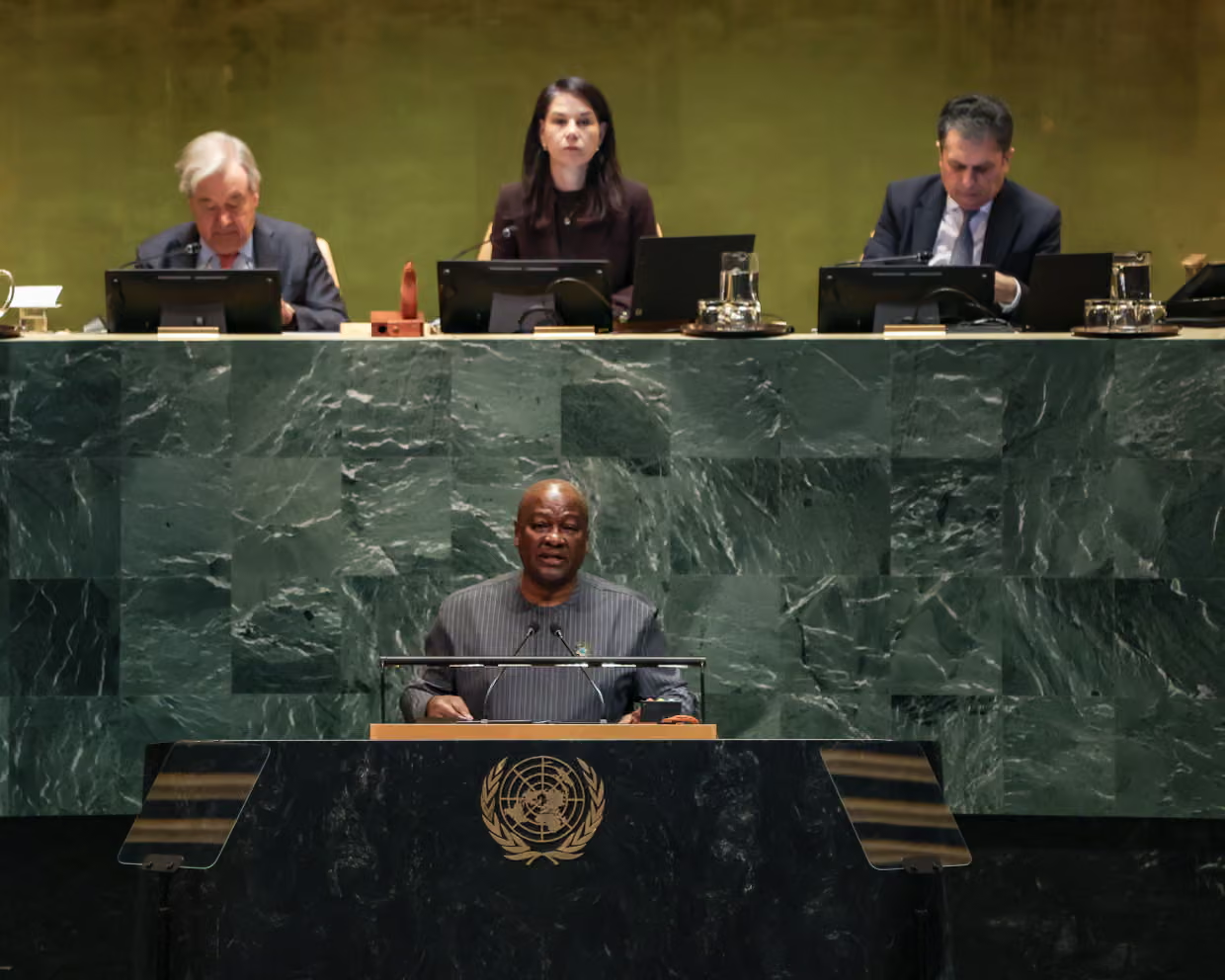
On 25 March, the UN general assembly adopted the Ghana-led resolution by 123 votes to three, with 52 abstentions. It declared that the enslavement of Africans was “the gravest crime against humanity” and urged steps including formal apologies, reparatory justice and the return of looted cultural property. The US, Israel and Argentina voted no; the UK and all EU member states abstained.
That voting pattern tells us everything about the world today. The Ghanian president, John Dramani Mahama, understood what was at stake. He called the resolution “a pathway to healing and reparative justice” and “a safeguard against forgetting”. The point was to establish a crime whose scale, brutality and enduring consequences structure the present.
Objections from Europe adopted the language of legal caution. Britain said it could not support the resolution because it created a “hierarchy of historical atrocities”. Ireland also said the wording implied a hierarchy among atrocities.
No one needs a lecture from former slave-trading powers on moral nuance. The insistence that calling slavery “the gravest” crime somehow dishonours other human suffering is a way of avoiding the world-making role of transatlantic slavery itself: the depopulation of Africa, the racial ordering of humanity, the conversion of black people into property, and the accumulation of wealth that helped build European and North American modernity. That is not a competition of suffering. It is historical specificity.
The ugliest reactions have come from the modern right. Reform UK is proposing to block visas from countries that demand reparations. Britain’s official position leaned on the old fallback that the UK later helped to abolish the slave trade. This is the familiar alchemy of imperial innocence, the politics of historical laundering.
Reparations are caricatured as a raid on the innocent rather than an attempt to address enduring structures of deprivation created by centuries of extraction. Black claims to justice are treated as greedy or destabilising, while the wealth transferred through enslavement is settled and beyond question.
This resolution affirms that reparations are “a concrete step towards remedy”, not an emotional indulgence. It creates a political and moral architecture, giving African and Caribbean states a platform from which to build the “reparative framework”. If the resolution were merely symbolic, the west would not be so nervous. The fear is not of rhetoric but of precedent. Recognition makes the old script harder to sustain. Then questions follow about debt, underdevelopment, museum collections, trade structures, who was compensated, and who never was.
There is something especially dispiriting about abstentions from countries like Ireland, where memory ought to make solidarity easier, not harder. That is the tragedy of Europe’s response in miniature: a continent willing to remember atrocity, but deeply resistant to itself as perpetrator.
This resolution exposes those who want the wealth from slavery to remain history’s most profitable amnesia. Justice delayed is not justice denied.
Africa and the Caribbean did not ask the UN for charity, but truth. On 25 March, truth won. Now comes the harder part: making former colonisers live with it.
*
Courtesy of Guardian News & Media Ltd.
Related:

 Unwritten Lives uses only essential cookies required for basic functionality.
We do not use analytics, tracking, or advertising cookies.
Unwritten Lives uses only essential cookies required for basic functionality.
We do not use analytics, tracking, or advertising cookies.